Sep. 07, 2026
Want to experiment with colorful hair without committing to permanent dye? Hair chalk is an easy way to add temporary color, highlights, or bold streaks to your hairstyle.
Whether you're getting ready for a party, festival, Halloween, cosplay event, photoshoot, or simply want to try a new color, hair chalk lets you change your look for a short time and wash it out when you're ready for something different.
In this guide, we'll explain how to use hair chalk, how to get more even color, how to work with darker hair, and how to remove the color afterward.
Hair chalk is a temporary hair-coloring product that deposits pigment onto the surface of the hair rather than permanently changing the hair color.
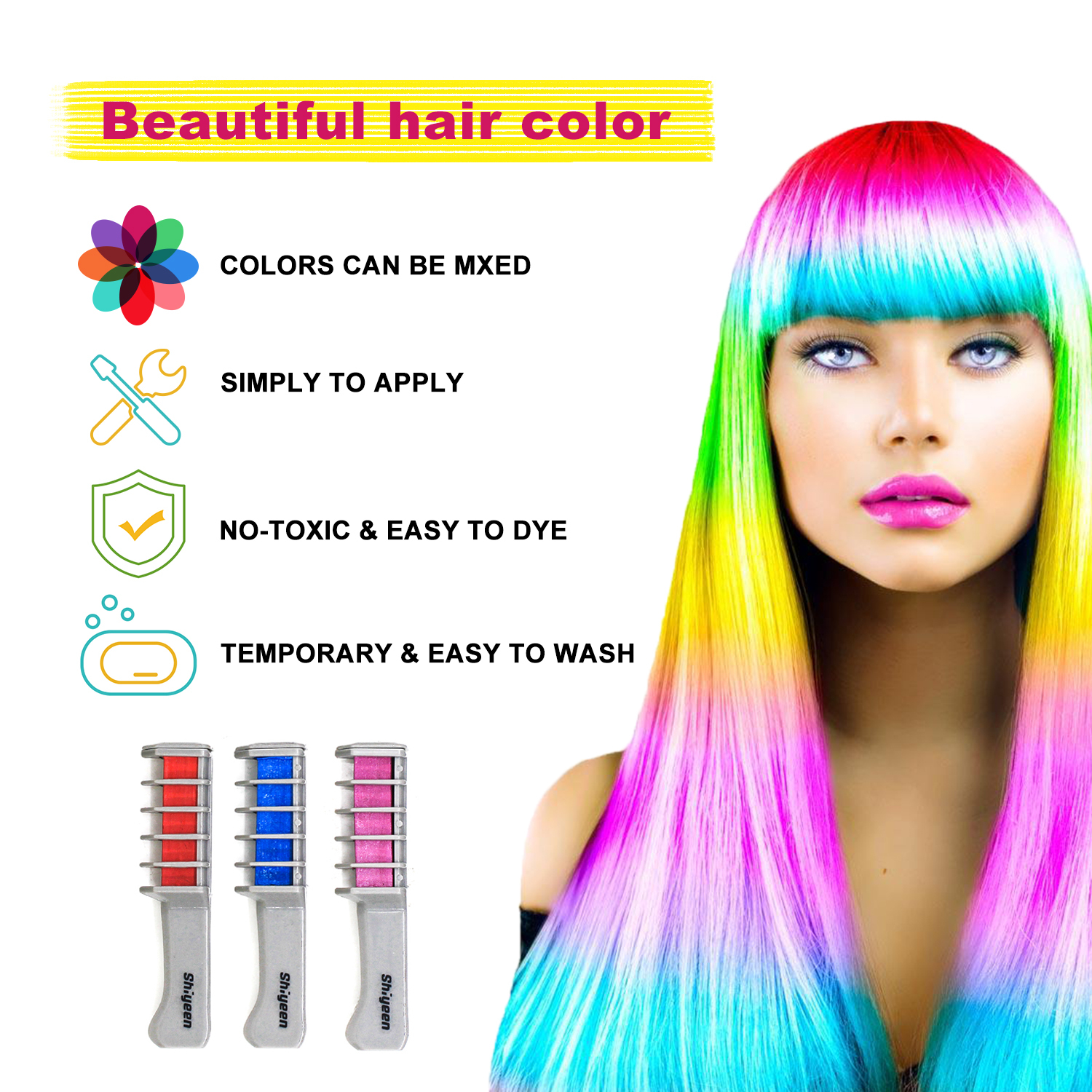
It is available in several formats, including chalk sticks, combs, compact powders, pens, sprays, and liquid formulas. The application method can vary depending on the product, so always follow the instructions supplied with your specific hair chalk.
Unlike permanent hair dye, temporary hair chalk is designed for short-term styling. This makes it useful when you want to experiment with a new shade without making a long-term color change.
Before you start, prepare everything you need so the application is easier and less messy.
You may want:
Hair chalk or a hair chalk comb
A hairbrush or comb
An old towel or shirt
Gloves, especially if the product transfers easily to your hands
A mirror
Clips for separating sections of hair
A small spray bottle of water if your product instructions recommend damp hair
Hairspray or another suitable styling product, if recommended for your specific formula
It's also a good idea to work in an easy-to-clean area because temporary hair color can transfer during application.
Start by choosing one or more colors that match the look you want to create.
For a subtle style, try one or two strands near the ends of your hair. For a bolder look, apply several colors to different sections.
If you're using multiple shades, consider colors that work well together, such as:
Pink and purple
Blue and turquoise
Red and orange
Purple and blue
Pink and blue
Testing a small section first can help you see how the shade looks against your natural hair color.
Begin with clean, detangled hair unless your product instructions recommend another method.
Brush through your hair gently and separate the section you want to color.
For easier application, divide your hair into several sections and secure the sections you're not working on with clips.
Avoid applying too many styling products before coloring unless they are specifically recommended for use with your hair chalk. Excess product can affect how evenly temporary pigment transfers to the hair.
Hair chalk can transfer during application, so place an old towel around your shoulders or wear clothing that you don't mind getting stained.
If you're using a product that transfers onto your hands, wearing disposable gloves can also make cleanup easier.
This is particularly useful when you're creating several colorful sections.
Take a small section of hair and hold it firmly.
Apply the hair chalk along the section in the direction of the hair, working from the upper part of the area you want colored toward the ends.
If you're using a hair chalk comb, place the hair between the coloring surfaces and gently pull the comb through the section. Repeat as needed until you reach the desired color intensity.
Avoid rubbing aggressively or repeatedly pulling the product back and forth over the same area, as excessive friction can make the hair feel rough or tangled.
Start with a small amount of color and build gradually. This gives you better control over the final result.
After the first application, check the color in natural light.
If you want a more noticeable result, apply another light layer rather than using a large amount of product at once.
This gradual approach is especially useful when working with:
Fine hair
Light-colored hair
Dark hair
Small highlights
Multiple colors
Remember that the final appearance depends on your original hair color, hair texture, the type of chalk you're using, and how much pigment is applied.
One of the most common questions is whether temporary hair chalk works on dark hair.
The answer depends on the formula and shade.
Bright or highly pigmented colors generally have a better chance of being visible on darker hair, while pastel or lighter shades may appear more subtle.
Some traditional hair chalk application methods recommend slightly dampening a section of dark hair before application to help the pigment appear more noticeable. However, other products are specifically designed for dry hair.
Always check the instructions for your specific product before adding water.
If you're unsure how a color will look, test it on a small, hidden section first.
Allow the colored section to dry or set according to your product instructions.
Some hair chalk formulas can be used directly on dry hair, while others may recommend damp hair during application.
If your product recommends a finishing spray or another method to help hold the color, follow those instructions after the hair has been properly applied and dried.
Avoid adding heat unless the manufacturer specifically recommends heat styling for that product.
Once the color has been applied and set, you can finish your hairstyle.
Try temporary color with:
Add different colors to individual strands before creating a braid for a colorful, layered effect.
Apply color to the ends or selected sections of a ponytail for a simple accent.
Color a few face-framing strands before creating loose waves for a more noticeable look.
Add several shades to the lower sections of your hair before styling space buns for a playful festival or costume look.
Instead of coloring your entire head, apply temporary color to a few selected strands for a subtle highlight effect.
The longevity of temporary hair chalk depends on several factors, including:
The type of hair chalk
Your hair color
Hair texture
Amount of product applied
Whether the hair gets wet
Styling products used
How often the hair is washed
Many temporary hair chalk products are designed to wash out with shampoo, but the exact number of washes can vary between formulas.
For this reason, it's better to follow the manufacturer's instructions rather than promise a specific number of days or washes for every hair chalk product.
When you're ready to return to your normal hair color, start by thoroughly washing your hair with your regular shampoo.
Follow with conditioner if needed.
If some pigment remains, repeat the washing process according to the product instructions.
Light-colored or highly porous hair may sometimes hold onto temporary pigments longer than expected, so testing the product on a small section before full application can help you understand how easily it will wash out.
If you're using hair chalk for the first time, start with a few strands rather than coloring your entire head.
Different natural hair colors can produce different results. Test the shade on a small section before creating your final hairstyle.
Combining two or three complementary colors can create more depth than using a single shade.
Temporary pigments may transfer during application or styling. An old shirt or towel can make cleanup much easier.
More product doesn't always mean better color. Build the shade gradually until you reach the intensity you want.
Hair chalk formulas differ. Some are designed for dry hair, while others may recommend damp hair or a finishing product. Follow the instructions provided with your specific product.
Hair chalk isn't limited to everyday experimentation. It can also be a convenient option for special occasions.
Create bright, colorful streaks that complement your festival outfit and makeup.
Match your temporary hair color with a party theme or simply add a bold accent to your hairstyle.
Temporary color can help complete a costume without permanently changing your hair.
Experiment with colors inspired by your favorite characters while keeping your natural hair color underneath.
Temporary color can add contrast and visual interest to creative hairstyles.
Try different shades and hairstyles for videos, tutorials, and beauty content.
It depends on the product and shade. Bright, highly pigmented colors are generally easier to see on darker hair than pale shades. Always test the product on a small section first.
Hair chalk is designed for temporary surface color, but different formulas and application methods vary. Avoid making broad claims about a product without checking its ingredients and manufacturer instructions.
It's best to follow the product instructions. Because temporary pigment can transfer to bedding and clothing, consider washing it out before sleeping if transfer is a concern.
Some formulas recommend damp hair, while others are designed to be applied to dry hair. Check the instructions for your specific product before adding water.
Depending on the formula, careful application, allowing the color to set properly, and using an appropriate finishing product may help improve wear. Follow the manufacturer's instructions for the best results.
Most temporary hair chalk products can be removed by washing the hair with shampoo, although the exact removal process varies by formula and hair type.
Hair chalk is a simple way to experiment with temporary color without committing to a permanent change. By choosing the right shade, preparing your hair properly, applying the color gradually, and following the instructions for your specific product, you can create anything from subtle highlights to bold, colorful hairstyles.
The key is to start with a small section, test the color, and build your look gradually.
Whether you're preparing for a festival, party, Halloween, cosplay event, or simply want to try something different, temporary hair color gives you plenty of room to experiment.
Ready to try a new look? Explore our hair chalk comb collection to find a temporary color option for your next hairstyle.
Previous: None
Next: 10 Creative Halloween Face Paint Ideas for Kids & Adults
Quick Link
Information